When Your Digital Habits Unlock Your Front Door: The Hidden Cybersecurity Risk Hiding in Your Key Records
For most residents across the DC Metro area, home security begins and ends with the physical: deadbolts, reinforced door frames, perhaps a Ring camera above the porch. What rarely enters the conversation is what happens to the data surrounding those physical protections—specifically, the digital records, photographs, and app logs that document your keys, your locks, and your home's vulnerabilities in extraordinary detail.
A quiet but accelerating threat has emerged in which bad actors are no longer just targeting your front door. They are targeting the digital trail that leads to it.
The New Anatomy of a Break-In
Traditional residential burglary relied on physical reconnaissance—a criminal driving slowly through a neighborhood, noting which homes appeared unoccupied, which doors looked flimsy, which windows were left open. That model has not disappeared, but it has been supplemented by something far more efficient: data.
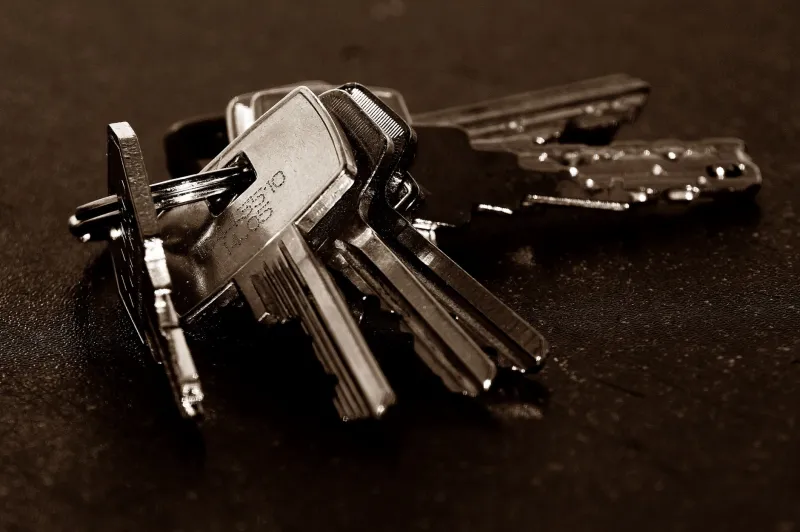
Consider what a motivated criminal can learn from a single compromised account. A homeowner who photographs their keys to share with a family member, stores the image in a cloud folder, and uses a smart lock app connected to that same account has, in effect, created a digital dossier of their home's access points. The keyway profile—the distinctive cut pattern that determines which lock a key operates—is visible in any reasonably clear photograph. With the right tools, that profile can be used to identify the lock manufacturer, the lock series, and in some cases, the specific vulnerabilities associated with that hardware.
This is not a hypothetical. Security researchers and law enforcement officials in the broader mid-Atlantic region have documented cases in which residential burglaries were preceded by the theft of digital information rather than physical surveillance. In several incidents, the entry point was not a broken window or a kicked-in door. It was a hacked email account containing a locksmith's service receipt.
Locksmith Service Records: A Goldmine for the Wrong Hands
When you call a licensed locksmith in the NCR—whether for a lockout, a rekey, or a new installation—a service record is generated. That record typically includes your address, the type of lock serviced, the key profile used, and in some cases, notes about the property's existing security configuration. Legitimate locksmith companies protect this information carefully. Not all operators, however, maintain the same standards.
Fraudulent locksmith operations—a problem the NCR has documented extensively—frequently collect this data without any intention of securing it. Even among legitimate businesses, cybersecurity practices vary widely. A small locksmith shop operating out of a van with a basic point-of-sale system may be storing your service records in an unencrypted spreadsheet synced to a personal Google Drive. That is not a secure repository for information that maps the access vulnerabilities of your home.
Beyond fraudulent operators, legitimate companies have also been targeted. Phishing attacks against small service businesses are common, and locksmiths are not exempt. When a service database is breached, the information exposed is not just financial—it is architectural. A list of recent service calls, cross-referenced with publicly available property records, can tell a criminal exactly which homes in a given zip code have recently had locks changed, which ones requested emergency lockout service (suggesting a spare key may not be on the premises), and which properties have older, potentially easier-to-defeat hardware.
Smart Home Apps and the Keyway Exposure Problem
The proliferation of smart lock technology across NCR homes has introduced a new dimension to this threat. Many smart lock applications log entry events, record access codes, and in some cases, retain photographs taken by integrated cameras at the moment of entry. This data is stored in cloud servers operated by the device manufacturer—servers that, like any cloud infrastructure, are not immune to breach.
Beyond the app data itself, consider the permissions granted to smart home ecosystems. A homeowner who links their smart lock to a broader platform—Amazon Alexa, Google Home, Apple HomeKit—creates a network of interconnected data points. A compromise of any single node in that network may expose information about the others. Entry logs, geolocation data, and lock status records can all become accessible to an attacker who gains a foothold in one connected account.
This does not mean smart locks are categorically unsafe. It means that the security of a smart lock is only as strong as the digital hygiene of the homeowner who operates it.
What NCR Homeowners Are Doing Wrong—and How to Correct It
The most common mistakes are neither exotic nor difficult to fix. They are, however, widespread.
Photographing keys and storing images in unsecured accounts. If you have ever taken a photo of a key to share with a family member or as a personal reference, that image should be deleted after its purpose is served. If retention is necessary, it should be stored in an encrypted file with access controls—not in a general photo library synced to a cloud account.
Using the same password across locksmith service portals and personal accounts. Many homeowners create accounts on service booking platforms without considering that a breach of that platform exposes any information they submitted. Use unique, strong passwords for every account, and enable multi-factor authentication wherever it is available.
Neglecting to audit smart lock app permissions. Review which applications have access to your smart lock data. Revoke permissions that are no longer necessary. Change your access codes periodically, particularly after granting temporary access to contractors, houseguests, or service personnel.
Failing to verify the cybersecurity practices of locksmith providers. When selecting a locksmith in the NCR, it is reasonable—and advisable—to ask how service records are stored and who has access to them. A reputable provider will have a clear, confident answer. Vague responses or resistance to the question are meaningful signals.
The Intersection of Physical and Digital Security
The lesson here is not that technology has made home security impossible. It is that security is no longer a purely physical discipline. The same diligence that NCR homeowners apply to their deadbolts and door frames must now extend to their passwords, their app permissions, and their digital storage habits.
A key is a piece of metal. But in the contemporary security environment, it is also a data point—one that can exist in a photograph, a service record, an app log, or a cloud backup. Each of those digital representations carries the same risk as the physical object itself, and in some respects, a greater one: a misplaced physical key affects one household, but a breached service database can expose hundreds.
At KeyMaker Inn CR, we believe that informed homeowners make better security decisions. Understanding where your key data lives—and who can access it—is no longer optional knowledge. It is the foundation of a genuinely secure home in the modern NCR.