Phantom Locksmiths: How Fraudulent Operators Are Gaming NCR Search Results and What You Must Know Before You Call
Imagine this: it is late on a Tuesday evening, and you are standing outside your Bethesda row house with no key, no way in, and a phone battery hovering at twelve percent. You open Google, search for a locksmith nearby, and call the first number that appears. Within the hour, a technician arrives, spends four minutes at your door, and hands you a bill for $385. You pay because you have no choice. The next morning, you discover the work was unnecessary, the company name does not match any licensed business in Maryland, and the phone number has already been disconnected.
This scenario is not hypothetical. It is a pattern that consumer protection agencies, local law enforcement, and legitimate locksmith professionals across the National Capital Region have been documenting with increasing urgency. The fraudulent locksmith industry has become sophisticated, well-funded, and deliberately difficult to detect—and the NCR, with its dense population, high residential turnover, and constant stream of commuters and visitors, has become one of its preferred operating grounds.
How the Scam Infrastructure Actually Works
Fraudulent locksmith operations do not typically operate out of a single storefront. Instead, they function as loosely organized call-center networks that create dozens—sometimes hundreds—of fake business listings across Google Business Profile, Yelp, Angi, and similar platforms. Each listing uses a different business name, a local-looking phone number routed through a virtual system, and a fabricated address that may correspond to a vacant lot, a UPS Store mailbox, or an entirely residential block.
When a customer calls, the operator dispatches whichever subcontracted technician is geographically closest, regardless of that person's qualifications, licensing status, or the tools they carry. The quoted price over the phone—often as low as $15 to $35 for a standard lockout—bears almost no relationship to the final invoice. Charges balloon once the technician is on-site, citing complications that may or may not be real, drilling locks that could have been picked, and replacing hardware at inflated rates using low-grade components.
The business listing is then abandoned or renamed before complaints accumulate enough to trigger a platform removal. A new listing, virtually identical in structure, takes its place within days.
Why the NCR Is Particularly Vulnerable
Several characteristics make the Washington DC metropolitan area an attractive target for these operations. The region's population is highly transient—military families, federal contractors, diplomatic staff, and university students cycle through constantly, meaning a significant portion of residents are unfamiliar with local service providers and have no established relationship with a trusted locksmith.
Additionally, the NCR spans three distinct jurisdictions: the District of Columbia, Maryland, and Virginia. Licensing requirements for locksmiths differ across these boundaries, and enforcement is inconsistent. A fraudulent operator can exploit this regulatory patchwork by conducting business in one jurisdiction while maintaining the appearance of compliance with another's rules.
High housing costs also play a role. In a region where a lockout can strand someone in an expensive neighborhood late at night, the psychological pressure to resolve the situation quickly overrides the instinct to vet the service provider carefully.
The Red Flags That Precede a Bad Experience
Knowing what to look for before you dial can mean the difference between a fair transaction and a costly ordeal. The following indicators warrant serious caution:
Unusually low advertised prices. Legitimate locksmiths in the NCR charge market-rate fees that reflect labor, licensing overhead, and equipment costs. Any advertisement quoting a flat service fee under $50 for a residential lockout should be treated skeptically. These figures are almost always bait.
No verifiable physical address. Search the business address independently before calling. If it resolves to a vacant property, a shared mailbox facility, or returns no results at all, that is a significant warning sign. Reputable locksmith businesses maintain an actual operational presence.
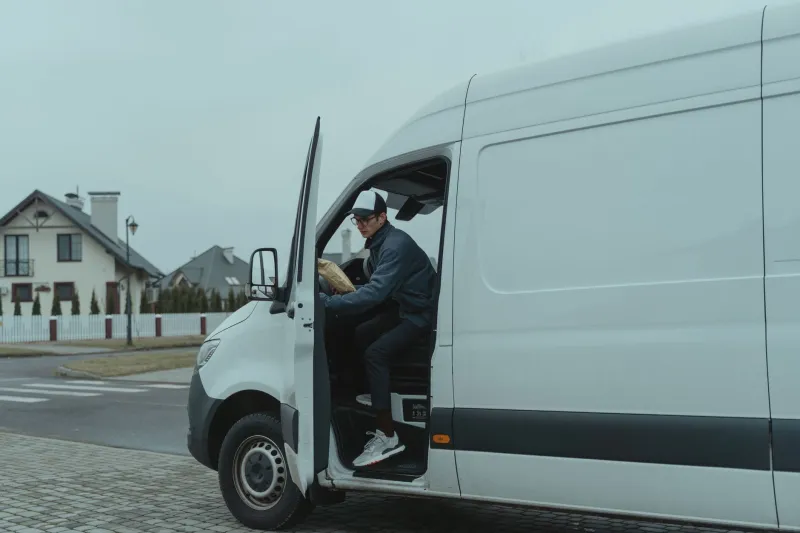
Unmarked vehicles and no company identification. A professional locksmith typically arrives in a clearly branded vehicle and carries identification that matches the company name you called. If the technician arrives in an unmarked car and cannot produce verifiable credentials, you are within your rights to ask them to leave.
Pressure to authorize work immediately. Fraudulent technicians frequently create urgency, insisting that a lock must be drilled rather than picked or that a cylinder must be replaced rather than rekeyed. Ask for a written estimate before any work begins. A legitimate professional will provide one without hesitation.
The price changes once they're at the door. Any significant deviation from the quoted price—without a clear, technical explanation you can verify—is a hallmark of price-gouging behavior.
How to Verify a Locksmith Before You Hire
The most effective protection against fraudulent locksmiths is preparation. Identifying a trustworthy provider before an emergency arises eliminates the pressure-driven decision-making that these operations rely upon.
Begin by checking licensing credentials. In Maryland, locksmiths are required to be licensed through the Maryland State Police. Virginia requires licensure through the Department of Criminal Justice Services. The District of Columbia has its own business licensing requirements. Each of these agencies maintains a publicly searchable database where you can confirm whether a business or individual holds a valid, current license.
Next, cross-reference the business name, phone number, and address across multiple platforms. A legitimate locksmith will appear consistently under the same name and contact information. If a company's phone number appears under three different business names across Google Maps and Yelp, that inconsistency is telling.
Look for membership in professional associations such as the Associated Locksmiths of America (ALOA). While membership alone does not guarantee quality, it does indicate a commitment to professional standards and accountability.
Read reviews critically. Fraudulent listings often display a cluster of generic five-star reviews posted within a short timeframe, with no specific details about the work performed. Authentic reviews tend to include specifics—the nature of the job, the technician's name, the neighborhood, the duration of the visit.
Finally, ask for a written estimate before work begins and confirm that the technician's identification matches the company name you originally called. These two steps alone eliminate a significant percentage of fraud risk.
What to Do If You Suspect You Were Scammed
If you believe you were overcharged or deceived by a fraudulent locksmith in the NCR, several avenues exist for recourse. File a complaint with your jurisdiction's consumer protection office—the DC Office of Consumer Protection, the Maryland Attorney General's Consumer Protection Division, or the Virginia Attorney General's Office, depending on where the incident occurred. You may also report the business listing directly to Google, Yelp, or whichever platform you used to find the operator.
Document everything: the original phone number, the final invoice, photographs of any work performed, and the name or vehicle description of the technician. This information is valuable both for your own potential dispute and for investigators tracking patterns of fraud.
Building a Relationship With a Verified Provider
The most durable protection against locksmith fraud is not reactive—it is proactive. Residents and business owners across the NCR benefit enormously from identifying a vetted, licensed locksmith before they are standing outside in the dark with a dead phone.
At KeyMaker Inn CR, our directory is designed precisely for this purpose: to provide a curated, verified resource of lock and key professionals operating throughout the National Capital Region. We do not list businesses that cannot demonstrate proper licensure and a verifiable local presence. When you use our directory as your starting point, you are working from a filtered baseline rather than sorting through an unmoderated search engine result page that fraudulent operators have learned to manipulate.
The phantom locksmith problem is real, it is growing, and it is operating openly across the same platforms you use every day. The answer is not to avoid seeking help—it is to seek it from sources that have already done the verification work on your behalf.