Everything You Own Behind One Padlock: A 2026 Self-Storage Security Audit for NCR Movers and Downsizers
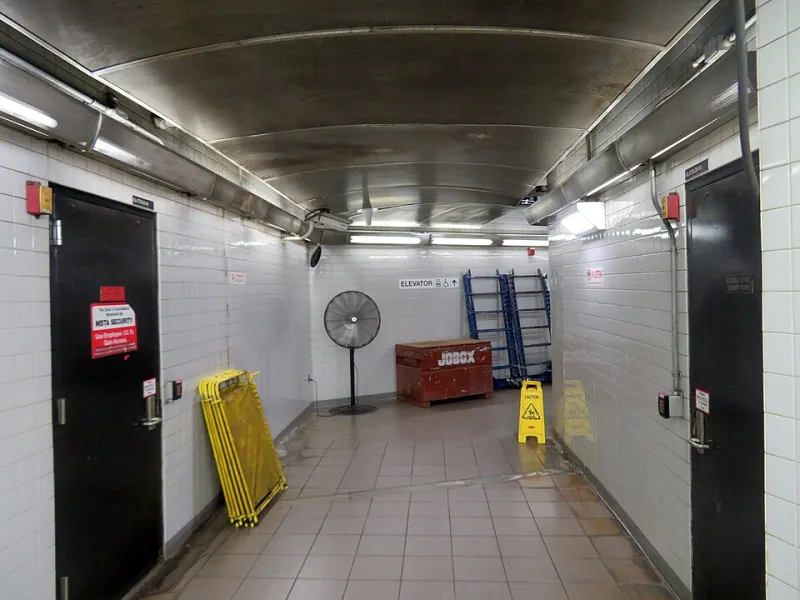
Photo: Pi.1415926535, CC BY-SA 3.0, via Wikimedia Commons
A Household Reduced to a Unit Number
There is a particular moment in every move or downsizing project when a lifetime of possessions becomes a numbered door in a climate-controlled corridor. The transition is practical and often necessary, especially in a region where housing costs push families toward interim storage between leases. It is also the moment when the security of everything you own collapses into a single padlock, a facility access code, and a unit number that may be visible from the driveway.
Self-storage facilities are generally well run and reasonably secure. They are also, by design, places where many people have legitimate access and few people are watching. A buyer's-guide approach to the decision — evaluating the lock, the facility, and your own habits before signing — is more useful than a general warning to be careful.
What a Storage Padlock Is Actually Up Against
A storage unit door is a rolling or swinging steel panel with a hasp. The padlock on that hasp is the only barrier. Compared with a residential deadbolt set into a solid frame, the padlock is exposed: its shackle can be attacked with bolt cutters, a reciprocating saw, or a pry bar, and the hasp itself is often the weaker component.
This changes the calculation. On a front door, a burglar weighs noise, time, and visibility. In a storage facility, the same person may have an access code, a vehicle, and a corridor with limited foot traffic. The lock must therefore resist cutting and prying rather than merely resist picking, and the hasp should be inspected for looseness or previous tampering before you hang anything on it.
Choosing the Lock: Disc, Shrouded, or Facility-Issued
A shrouded disc padlock is the conventional recommendation for storage units, and the reasons are straightforward. The disc-style shackle presents a hardened, curved surface that is difficult for bolt cutters to grip, and the shroud limits access to the shackle with a saw. A conventional laminated padlock, by contrast, offers a long exposed shackle and a body that can be defeated relatively quickly.
Some facilities require a specific lock type or offer a lock for purchase, often keyed so that staff can perform a supervised cut in an emergency. Before buying hardware, confirm the facility's rules. A high-security lock that violates the lease terms creates its own complications, and an inexpensive facility-issued lock may be entirely adequate if the facility's other controls are strong.
Whatever you choose, buy it new and keep the packaging. A padlock with no provenance is difficult to evaluate if something goes wrong later.
The Shared-Code Problem
Gate codes at storage facilities are frequently shared among staff, tenants, and contractors, and they are changed less often than one might assume. Treat the code as a convenience, not a security control. Do not reuse a gate code as a lock combination, and do not assume that a code issued to you is unique.
If the facility offers individual access codes with entry logging, that is a meaningful feature worth asking about. Entry records at the gate and at building doors are the single most useful investigative tool in the event of a loss, and a facility that cannot produce them is one where a dispute becomes a matter of recollection.
Do Not Reuse the Lock from the Old Shed
A padlock that has hung on a garden shed for a decade has been exposed to weather, and its internal mechanism may be corroded in ways that are not visible. More importantly, its keys may exist in more places than you remember.
Reusing a lock carries the same logic as reusing a key: any copy made years ago for a family member, a tenant, or a contractor remains functional. For a unit holding a household's contents, the modest cost of a new, correctly rated padlock is the cheapest security decision in the entire move. Retire the old lock to a garden gate and keep its history contained there.
Unit Numbers, Signage, and Information Leakage
Small habits leak information. A unit number written on the outside of a moving box, a storage app that displays the unit on a lock screen, or a conversation with a neighboring tenant about what is inside all reduce the anonymity that protects a unit.
Where possible, keep high-value items away from the door so they are not visible when the unit is open, and avoid storing items in original packaging that announces their contents. Ask whether the facility permits interior partitions or shelving that block sightlines. If the facility requires your name on the unit, confirm how visible that labeling is from a public corridor.
The Paper Trail
Before the truck pulls away, confirm three things in writing: the facility's policy on staff access to units, the procedure for a lock cut in an emergency, and the insurance or protection plan that applies to your contents. Many renters assume the facility insures their belongings; most leases say otherwise, and a homeowner's or renter's policy may cap coverage for property stored off-site.
Prepare a simple inventory with photographs and serial numbers, stored separately from the unit. If a claim or a police report is ever required, a dated list will do more than a memory.
Questions to Ask Before You Sign
- Which lock types are permitted, and is a facility-issued lock required?
- Are individual access codes available, and are gate entries logged?
- What is the camera coverage of corridors and doors, and how long is footage retained?
- How is staff access to units documented?
- What is the procedure if a tenant loses a key or stops paying?
- Does the lease require any specific insurance or protection plan?
- Who can authorize a lock cut, and will the tenant be notified?
When You Move Out
Empty the unit completely, sweep it, and photograph it on the day you leave. Remove your padlock and return any access devices. Confirm in writing that the unit has been released and that your code has been deactivated, rather than assuming the gate system has been updated.
A storage unit is a temporary arrangement, but the contents inside it are usually not. Treating the padlock, the code, and the paperwork as a single system — rather than three unrelated errands — is what separates a smooth transition from a costly one.