When One Missing Key Becomes a Property Manager's Worst Crisis: Lessons from the DC Metro
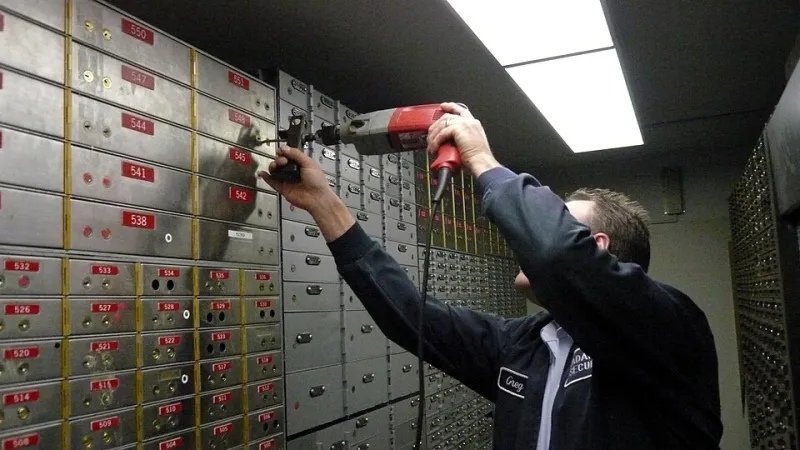
Photo: Robert J Banach (RobertJBanach), Public domain, via Wikimedia Commons
It begins, almost always, with something unremarkable. A maintenance technician leaves a position without returning a master key. A former tenant insists she surrendered all copies but cannot produce a receipt. A contractor finishes a renovation job and the site key is simply not collected at closeout. Individually, each of these moments registers as a minor administrative lapse. Collectively, they form the foundation of what security professionals call a compromised key ecosystem—and in the dense, high-turnover rental market of the National Capital Region, that ecosystem can unravel with startling speed.
At KeyMaker Inn CR, we have spoken with property managers, building owners, and locksmiths across Northern Virginia, suburban Maryland, and the District who have witnessed firsthand how a single forgotten key copy can cascade into consequences far exceeding what the original oversight seemed to warrant.
The Anatomy of a Key Control Failure
Key control failures rarely announce themselves. They accumulate silently, often over years, until a triggering event forces a reckoning. Consider the following composite scenarios, drawn from patterns that are well-documented across the NCR property management community.
Scenario One: The Inherited Key Ring
A mid-sized apartment building in Prince George's County changes management companies. The incoming team receives a physical key box containing what is documented as the complete master key set. No audit is conducted. Eighteen months later, a tenant reports that her unit was entered without notice. Investigation reveals that the previous management company had issued sub-master keys to three contractors who never returned them—none of which appeared in the key log handed over at transition. The building owner faces a tenant complaint, a potential Fair Housing inquiry, and the cost of rekeying forty-seven units.
Scenario Two: The Contractor Cascade
A commercial office building in Rosslyn undergoes a phased renovation. Over eight months, eleven different contractor teams are issued temporary keys to access mechanical rooms and common areas. The project manager tracks key issuance on a shared spreadsheet that is updated inconsistently. At project closeout, two keys cannot be reconciled. Rather than trigger a full rekey—estimated at several thousand dollars—management elects to monitor the situation. Four months later, after-hours access to a server room is detected. The investigation cannot rule out that the unrecovered contractor keys were involved. The tenant whose equipment was accessed terminates their lease.
Scenario Three: The Good-Faith Duplicate
A property manager at a Capitol Hill row house conversion issues a spare key to a tenant's adult child, who is listed as an emergency contact. The tenant moves out two years later. The adult child's key is never collected because the property manager assumes the tenant handled it. The unit is re-leased. The new tenant, three months in, reports that items have been disturbed in her absence. There is no forced entry. The property owner, now facing a potential liability claim, must rekey the unit, conduct a security review, and navigate a deeply uncomfortable conversation with a former tenant's family member.
Why Spreadsheets Are Not Enough
The common thread across these scenarios is not malice—it is process failure. Most NCR property managers are not negligent; they are under-resourced and operating with tracking tools that were not designed for the complexity of modern key ecosystems.
A spreadsheet can record that a key was issued. It cannot enforce a return deadline, flag an overdue key, or alert a building manager when a former employee's access credentials have not been revoked. It cannot distinguish between a key that was returned and one that was merely reported as returned. And it offers no audit trail that would satisfy an insurer or an attorney in the event of a liability dispute.
This gap between what spreadsheet-based systems promise and what they deliver is precisely where key control failures take root.
The Legal and Financial Exposure Is Real
Property owners and managers in the NCR operate within a layered legal environment that treats tenant security obligations seriously. The District of Columbia, Virginia, and Maryland each maintain landlord-tenant statutes that establish minimum security standards for residential rentals, and courts in all three jurisdictions have found landlords liable for security failures that were foreseeable and preventable.
An uncontrolled key is, by most reasonable interpretations, a foreseeable security risk. If a tenant can demonstrate that unauthorized access occurred and that the property's key management practices were inadequate—poorly documented issuances, missing return records, no rekeying between tenancies—the landlord's exposure can extend well beyond the cost of a locksmith visit. Attorney's fees, damages for emotional distress, and insurance premium increases are all plausible downstream consequences.
For commercial property managers, the calculus is similar. Tenants in office buildings and mixed-use developments have their own security obligations to their clients and employees. A key control failure at the building level can directly impair a commercial tenant's ability to meet those obligations—and provide grounds for lease termination or damages claims.
What Responsible Key Management Actually Looks Like
The good news is that the standard for adequate key control is not prohibitively high. It is, however, more structured than what most NCR properties currently practice.
Mandatory key inventories at transition points. Every change of occupancy—residential or commercial—should trigger a formal key audit. All issued copies must be accounted for, and any unrecovered keys should result in an automatic rekey before the next occupant takes possession. This is not optional best practice; in many circumstances, it is the minimum a court would expect.
Numbered key systems with chain-of-custody documentation. Each key issued should carry a unique identifier tied to a documented record: who received it, when, for what purpose, and when it was returned. Physical key tags and logbooks suffice for smaller properties. Larger portfolios benefit from dedicated key management software.
Restricted keyway systems for master keys. As discussed in other KeyMaker Inn CR coverage, master keys issued on restricted keyway systems cannot be duplicated at retail counters. This single measure substantially limits the damage a non-returned master key can cause, because unauthorized copies cannot be made without access to a licensed dealer.
Technology-assisted tracking. Several platforms now offer key management solutions tailored to property management workflows—digital check-in and check-out logs, automated return reminders, and integration with property management software already in use. For large NCR portfolios spanning multiple buildings, these tools offer a level of oversight that manual systems cannot match.
Regular audits, not just reactive ones. Key inventories should not occur only at move-out. Quarterly or semi-annual audits of all outstanding keys—particularly master keys and contractor access keys—allow managers to identify discrepancies before they become crises.
The Argument for Treating Keys as Assets
Perhaps the most useful reframe for NCR property managers is this: a key is not an administrative artifact. It is a physical asset with a defined access value. It should be tracked with the same discipline applied to other property assets—maintenance equipment, lease agreements, insurance documentation.
When a key is treated as an asset, its lifecycle becomes a managed process rather than an afterthought. Issuance requires authorization. Return requires verification. Loss requires a defined response protocol. And the entire record is preserved in a form that can be produced if ever challenged.
The property managers who have adopted this mindset across the DC Metro area are not spending significantly more time on key administration. They are simply spending it more deliberately—and discovering that the investment pays for itself the first time a potential crisis is averted before it begins.
KeyMaker Inn CR maintains a directory of key management and locksmith professionals serving the full National Capital Region. If your property's key ecosystem is overdue for a review, our directory can connect you with qualified local providers.