The Case for Smarter Key Management Across DC Metro Multi-Unit Properties
Photo: Robert J Banach (RobertJBanach), Public domain, via Wikimedia Commons
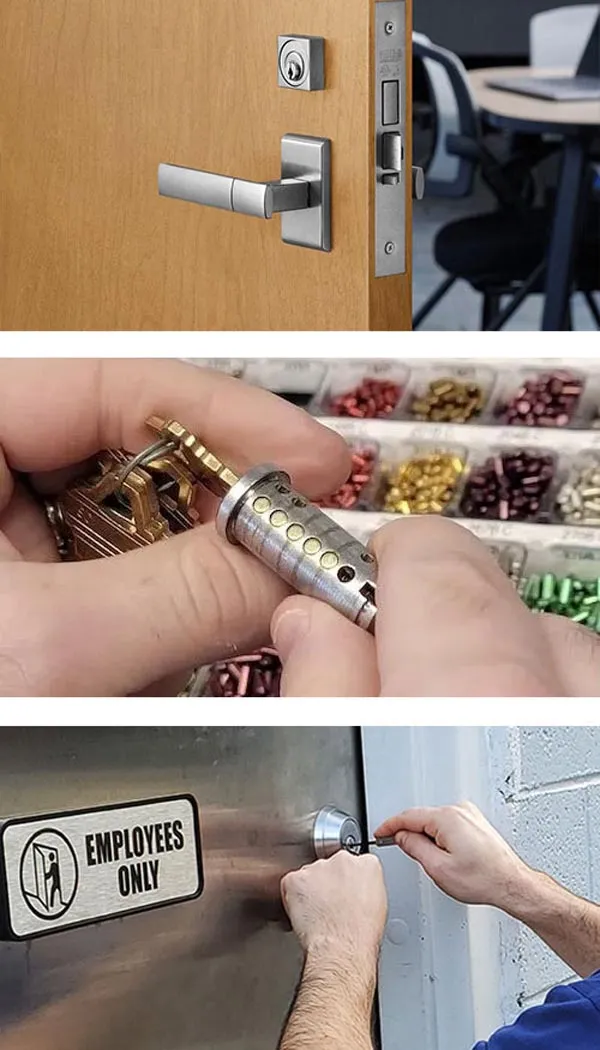
There is a drawer—or a pegboard, or a lockbox, or sometimes just a coffee can—in nearly every property management office in the National Capital Region. Inside it, keys. Dozens of them, sometimes hundreds, labeled with varying degrees of precision and organized according to whatever system made sense to whoever set it up years ago. It is, in most cases, a liability waiting to express itself.
The multi-unit residential market in the DC Metro is substantial and growing. From the high-rise apartment towers of Rosslyn and Silver Spring to the converted row-home rentals scattered across Capitol Hill and Takoma Park, the region's property managers collectively oversee tens of thousands of individual units. Each of those units involves at least one physical key, and most involve several. The management of those keys—who has them, where duplicates live, what happens when one goes missing—is, for many operators, an afterthought. That is beginning to change.
The True Cost of a Lost Key
When a tenant reports a lost key, the immediate expense is visible and relatively modest: a replacement key cut, perhaps a rekeying service if the property manager decides the security risk warrants it. But the full cost of that event is rarely calculated.
Consider the staff time involved in fielding the call, coordinating with a locksmith, documenting the incident, and following up with the tenant. Add the cost of the rekeying service itself—typically $40 to $80 per cylinder in the NCR market—and any after-hours emergency premium if the tenant is locked out. Multiply that across a portfolio of 50 or 100 units, where lost key incidents occur with uncomfortable regularity, and the annual cost becomes significant. One property management firm operating a 75-unit portfolio in the Maryland suburbs estimated that key-related service calls accounted for nearly 8 percent of its annual maintenance expenditure. That figure did not include the subtler cost of tenant frustration, which is harder to quantify but no less real.
What a Key Management System Actually Does
The term "key management system" can refer to a range of solutions, from relatively simple mechanical key cabinets with electronic audit trails to fully integrated software platforms that synchronize physical key issuance with lease management and access control records. What they share is a commitment to accountability: every key has a documented location, every issuance is recorded, and every discrepancy triggers a notification rather than a shrug.
At the entry level, electronic key cabinets—units that require a PIN or credential to access and log every transaction—replace the coffee-can approach with something defensible. A property manager can pull a report showing exactly which keys were accessed, by whom, and when. If a key goes missing from the cabinet, the audit trail narrows the window of accountability considerably.
More sophisticated platforms extend this logic across the entire key lifecycle. When a new tenant signs a lease, the system generates a key issuance record tied to that lease. When the tenant moves out, the return of all issued keys is documented. If a key is not returned at move-out, the system flags it and can automatically generate a rekeying work order—eliminating the manual follow-up step that frequently falls through the cracks in busy management offices.
The NCR Context: Why This Region Has Particular Incentives to Adopt
The Washington metro area presents a specific set of conditions that make key management discipline especially valuable. Tenant turnover in the region's urban core is high relative to national averages, driven by the transient nature of government employment, the large graduate student population, and the competitive rental market that encourages frequent moves. Each turnover event is a key management event. Properties with high turnover and poor key tracking are, in effect, operating with an unknown number of uncontrolled keys in circulation at any given time.
Landlord-tenant law in the District of Columbia, Maryland, and Virginia also creates accountability expectations that responsible operators should take seriously. While the specifics vary by jurisdiction, property managers who cannot demonstrate a documented key control process may find themselves in a difficult position when disputes arise over security incidents or security deposit deductions. A key management system creates the paper trail—or digital trail—that supports defensible decision-making.
There is also the matter of insurance. Several commercial property insurers operating in the NCR market have begun factoring access control practices into their underwriting assessments. A documented key management protocol, particularly one supported by an electronic system with audit capabilities, can support a more favorable risk profile.
Technology Is Lowering the Barrier to Entry
For smaller landlords and independent property managers, the perception that key management systems are expensive enterprise tools has historically been a deterrent. That perception is increasingly outdated.
Cloud-based property management platforms now commonly include key tracking modules as standard features rather than premium add-ons. Several hardware manufacturers have introduced electronic key cabinets priced for small-to-midsize portfolios, with subscription-based software tiers that scale with the number of units under management. The upfront investment for a 20-unit operator has dropped substantially over the past three years, and the ongoing cost is, in most cases, offset by the reduction in lost-key incidents and emergency locksmith calls within the first year of operation.
For properties that are ready to move beyond physical keys entirely, smart lock technology integrated with property management software offers a more comprehensive solution. Tenant-specific access codes that expire automatically at lease end eliminate the key return problem altogether. These systems are not appropriate for every property type or every tenant demographic, but in the right context—particularly newer construction with tech-comfortable tenants—they represent a meaningful evolution in access control.
A Shift in Professional Standards
What is perhaps most notable about the current moment is that key management is transitioning from a best practice to an expected standard among professional property managers in the DC Metro. Industry associations, property management training programs, and insurance providers are collectively raising the baseline expectation for what responsible key control looks like.
Landlords who have relied on informal systems for years are finding that the gap between their current practice and the emerging standard is narrowing faster than they anticipated. The incentive to close that gap—through technology, through process, or through both—has never been more concrete.
At KeyMaker Inn CR, we recognize that the relationship between property managers and their locksmith partners is central to this transition. The right commercial locksmith is not simply a service provider called in emergencies; they are a resource for ongoing security planning, key system design, and hardware recommendations tailored to the specific demands of multi-unit residential management. Our directory is built to help NCR property managers find those partners—and to make better-informed decisions about the systems that protect their properties, their tenants, and their peace of mind.